
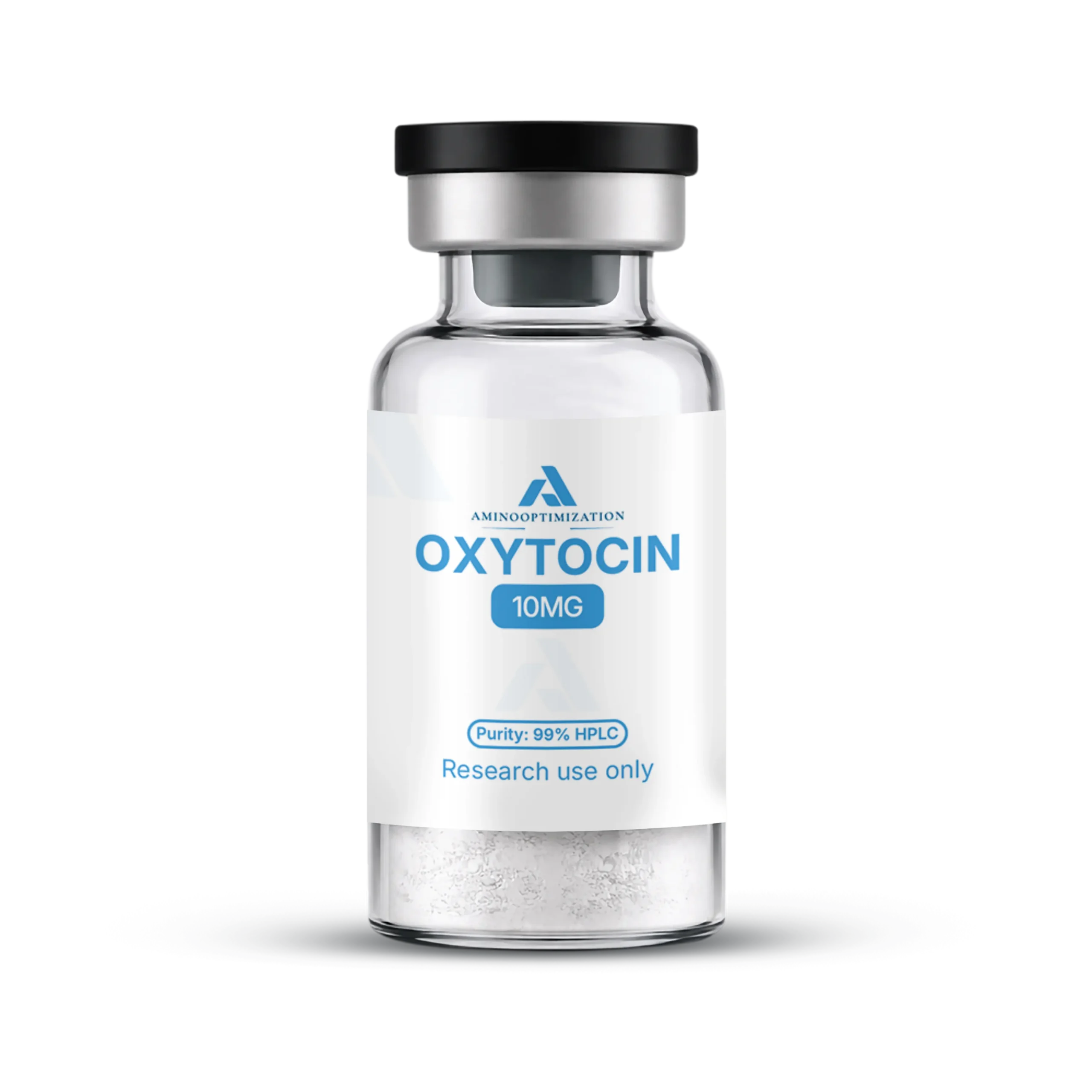
Oxytocin is a cyclic nonapeptide hormone, structurally related to vasopressin and synthesised endogenously in the hypothalamus before release from the posterior pituitary. AminoOptimization Group supplies it as a lyophilised research powder in a 10 mg presentation, tested to 99% purity by HPLC, with a Certificate of Analysis available for the lot supplied. This material is offered strictly for laboratory research use. It is not a drug, and it is not for human or veterinary use.
What is Oxytocin?
Oxytocin is a nine-residue peptide with the sequence Cys-Tyr-Ile-Gln-Asn-Cys-Pro-Leu-Gly-NH2. An intramolecular disulfide bond links the cysteine residues at positions 1 and 6, closing a six-membered ring at the N-terminal end of the molecule. The C-terminal glycine carries an amide rather than a free carboxylic acid, a modification characteristic of peptide hormones processed through the classical prohormone convertase pathway and one that published work associates with resistance to carboxypeptidase degradation.
The molecule is closely related to arginine vasopressin, differing at only two positions: isoleucine at position 3 and leucine at position 8, versus phenylalanine and arginine in vasopressin. The two hormone genes are thought to derive from a common ancestral duplication and are arranged tail-to-tail on the same chromosome in several mammalian genomes. Both are synthesised as larger preprohormones, each linked to its own neurophysin carrier protein, and are proteolytically cleaved to the mature nonapeptide during axonal transport to the posterior pituitary.
Because this sequence is identical to the native mammalian hormone, it is frequently used in research as the reference ligand against which synthetic oxytocin-receptor agonists, antagonists, and structural analogues are characterised. Its short length and single disulfide bridge also make it a common reference case in peptide synthesis and folding literature, distinguishing it from the larger, linear, or multiply-bridged peptides more typical of this catalogue.
Specifications
- Compound: Oxytocin
- CAS number: 50-56-6
- Molecular formula: C43H66N12O12S2
- Molecular weight: 1007.19 g/mol
- Purity: 99% HPLC
- Presentation: Lyophilised powder, sealed vial
- Available sizes: 10 mg
- Physical form: White to off-white powder
- Classification: Research peptide — not for human or veterinary use
Research context
Published research on oxytocin concentrates heavily on its receptor, OXTR, a class A G protein-coupled receptor that couples primarily to Gq/11 and downstream phospholipase C signalling. Structure-activity work uses the native sequence as the reference ligand for characterising the binding affinity and selectivity of oxytocin-receptor agonists and antagonists relative to the related vasopressin receptor subtypes, V1a, V1b, and V2, which share substantial sequence homology with OXTR.
The compound appears extensively in rodent behavioural neuroscience, where receptor knockout lines and pharmacological blockade are used to dissect its contribution to social recognition, parental behaviour, and pair-bond formation in species such as the prairie vole. Isolated smooth-muscle preparations, including uterine strips from rodent and other mammalian models, are a standard tool in classical pharmacology assays examining receptor-mediated contractile signalling and dose-response relationships at the tissue level. A separate body of literature examines central versus peripheral signalling compartments, including the extent to which peripherally administered peptide crosses the blood-brain barrier in experimental animal models, and the methodological challenges this raises for interpreting behavioural studies.
None of this literature establishes safety or efficacy for use in humans. It is provided as research context only.
Reconstitution
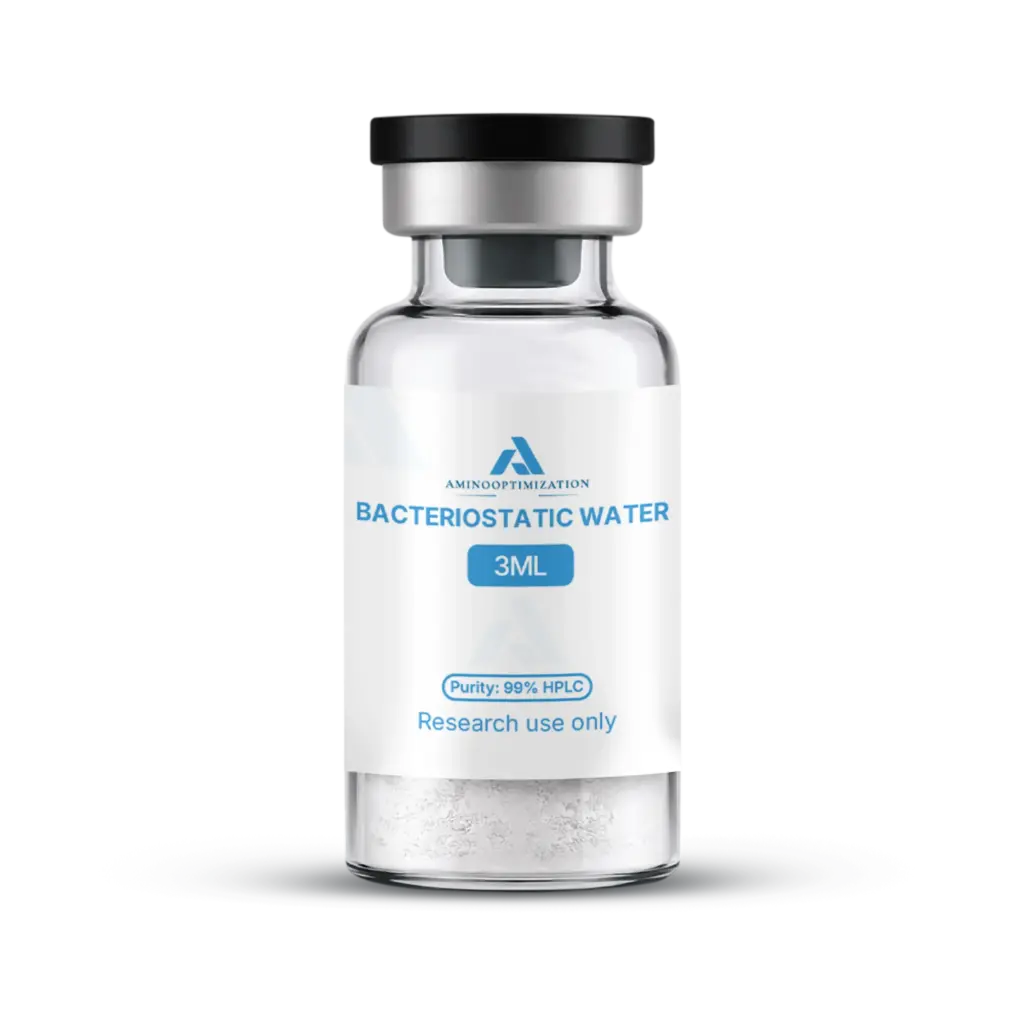
Lyophilised peptide requires reconstitution with a suitable sterile diluent before use in solution. Bacteriostatic water is the diluent most commonly specified for multi-use laboratory preparations; sterile water is typical for single-use work.
Direct the diluent stream against the inner wall of the vial rather than onto the powder itself, and allow the material to dissolve without agitation. Peptides are susceptible to shear stress — do not shake the vial. Swirl gently if needed, and expect full dissolution within a few minutes at room temperature.
Working concentration is a function of how much diluent is added to a given vial mass. Our peptide reconstitution calculator computes the resulting concentration for any combination of vial size and diluent volume.
Storage and stability
Before reconstitution: store the sealed vial in a freezer at -20 °C, protected from light. Lyophilised peptide is comparatively stable in this state. Brief excursions to ambient temperature during shipping are normal and are not expected to compromise a properly lyophilised product.
After reconstitution: refrigerate at 2–8 °C and protect from light. Reconstituted peptide in solution is materially less stable than the dry powder, and oxytocin in particular is documented in the literature as susceptible to oxidation of its disulfide bridge and to aggregation over repeated handling. Avoid repeated freeze-thaw cycles — aliquot instead if repeated sampling is required.
Inspect solutions before use. Cloudiness, visible particulate, or discolouration indicate the material should not be relied upon for quantitative work.
Certificate of Analysis
Every lot is tested by high-performance liquid chromatography, and the purity figure shown above refers to analytical results for the specific lot supplied — not to a generic specification. A Certificate of Analysis is available on request, and we will provide lot-specific documentation before purchase if your protocol requires it.
Purity by HPLC describes the proportion of the target peptide relative to detectable related substances. It is a statement about the material as manufactured and tested. It is expressly not a representation that the material is suitable for any use in humans or animals.
Handling and safety
Handle in accordance with good laboratory practice. Use appropriate personal protective equipment, work in a suitable containment environment, and dispose of material and consumables according to your institution’s requirements and applicable local regulation. Anyone with access to this material should understand that it is not for human or veterinary use.
Frequently asked questions
What is the difference between oxytocin and vasopressin?
The two nonapeptides differ at only two of nine residues — position 3 and position 8 — and are thought to share a common ancestral gene. Despite the similarity, they act on distinct though related receptor subtypes, and researchers use this near-identical pair as a model for studying how small sequence changes redirect receptor selectivity.
Is Oxytocin approved in Canada?
No. This compound has not been evaluated or authorised by Health Canada, the FDA, or any comparable regulatory authority. It carries no DIN or NPN, its safety and efficacy for human use have not been assessed, and it is supplied for laboratory research only.
How much diluent should be used?
That depends on the working concentration your protocol requires. Use the reconstitution calculator to work out the resulting concentration for your vial size.
How long is reconstituted oxytocin stable in solution?
Stability in solution is shorter than in lyophilised form and depends on diluent, temperature, and handling. Refrigerate at 2–8 °C, protect from light, avoid freeze-thaw cycling, and validate stability for your own storage conditions if your work depends on it.
Do you provide a Certificate of Analysis?
Yes — lot-specific, available on request, including before purchase.
Research use only
This product is supplied solely for laboratory and scientific research. It is not a drug, food, cosmetic, or medical device, and it must not be administered to humans or animals. Nothing on this page is medical advice or a therapeutic claim. Full terms are set out in our Research Use Only Disclaimer.
Reviews
There are no reviews yet.