
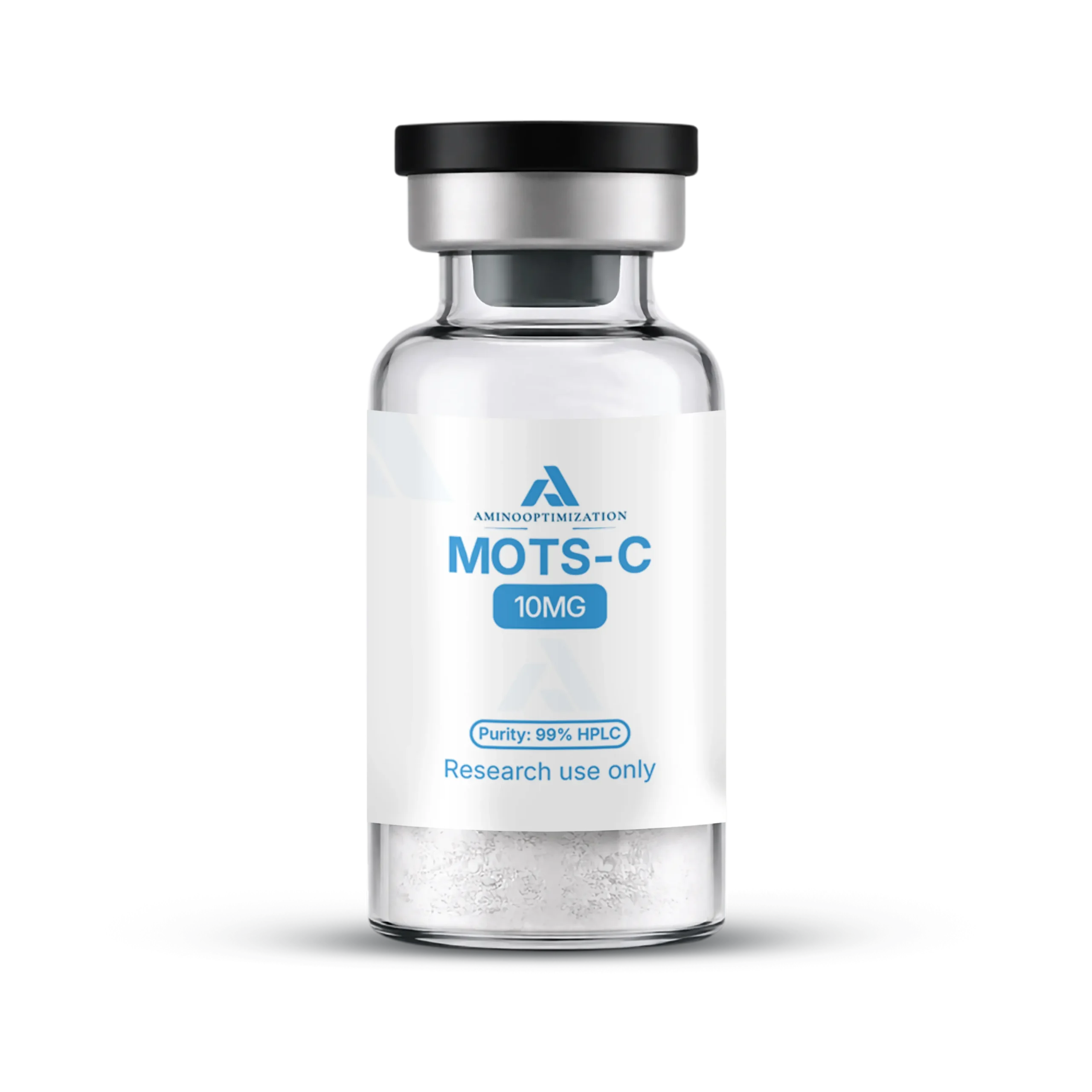
MOTS-C is a 16-residue mitochondrial-derived peptide (MDP), encoded by a short open reading frame within the mitochondrial 12S ribosomal RNA gene (MT-RNR1) rather than by nuclear DNA. AminoOptimization Group supplies it as a lyophilised research powder in 10 mg, 20 mg and 40 mg presentations, tested to 99% purity by HPLC, with a Certificate of Analysis available for the lot supplied. This material is offered strictly for laboratory research use. It is not a drug, and it is not for human or veterinary use.
What is MOTS-C?
The name MOTS-C is an abbreviation of Mitochondrial Open Reading Frame of the Twelve S rRNA type-c. It was identified through bioinformatic screening of the mitochondrial genome for short open reading frames lying outside the thirteen canonical protein-coding genes that support oxidative phosphorylation. Its 16-amino-acid sequence (Met-Arg-Trp-Gln-Glu-Met-Gly-Tyr-Ile-Phe-Tyr-Pro-Arg-Lys-Leu-Arg) contains two internal methionine residues, consistent with the two sulfur atoms in its molecular formula, alongside a cluster of aromatic residues — one tryptophan and two tyrosines — that shape its retention behaviour under reversed-phase HPLC.
MOTS-C belongs to a small class of peptides collectively termed mitochondrial-derived peptides. The other well-characterised member of this class, humanin, is encoded at a separate locus — the 16S ribosomal RNA gene, MT-RNR2 — and is examined through largely distinct proposed pathways. Because MOTS-C originates from mitochondrial rather than nuclear DNA, its translation follows a route distinct from nuclear-encoded hormone analogues, and published work describes it as capable of moving from the cytoplasm to the nucleus under specific stress conditions, rather than acting solely at a cell-surface receptor.
This mitochondrial origin is what sets MOTS-C apart as a research subject relative to nuclear-encoded regulatory peptides: it is studied as a candidate signal in mitochondrial-to-nuclear communication, a function not accounted for by the mitochondrial genome’s thirteen canonical gene products.
Specifications
- Compound: MOTS-C
- CAS number: 1627580-64-6
- Molecular formula: C100H152N28O22S2
- Molecular weight: 2174.59 g/mol
- Purity: 99% by HPLC
- Presentation: Lyophilised powder, sealed vial
- Available sizes: 10 mg, 20 mg, 40 mg
- Physical form: White to off-white powder
- Classification: Research peptide — not for human or veterinary use
Research context
Published research on MOTS-C centres on its proposed role as a mitochondrial-derived signal that influences nuclear gene expression under conditions of metabolic stress, such as glucose restriction, in cell culture and rodent models. Study designs frequently examine activation of AMP-activated protein kinase (AMPK) signalling following exposure, along with downstream changes in genes associated with the NRF2-mediated antioxidant response pathway.
Because it is mitochondrially encoded, MOTS-C is also used as a model system for investigating mitochondrial-to-nuclear retrograde signalling — whether small peptides encoded outside the thirteen canonical mtDNA genes constitute an independent regulatory layer. Comparative study designs alongside other mitochondrial-derived peptides, including humanin, are used to probe whether distinct loci within the mitochondrial genome give rise to peptides with distinct downstream signalling profiles.
Circulating concentrations of MOTS-C in skeletal muscle and plasma samples have also been examined in relation to acute exercise protocols in published cohort studies, with reported associations varying across the literature depending on tissue sampled, timing, and assay method. None of this literature establishes safety or efficacy for use in humans. It is provided as research context only.
Reconstitution
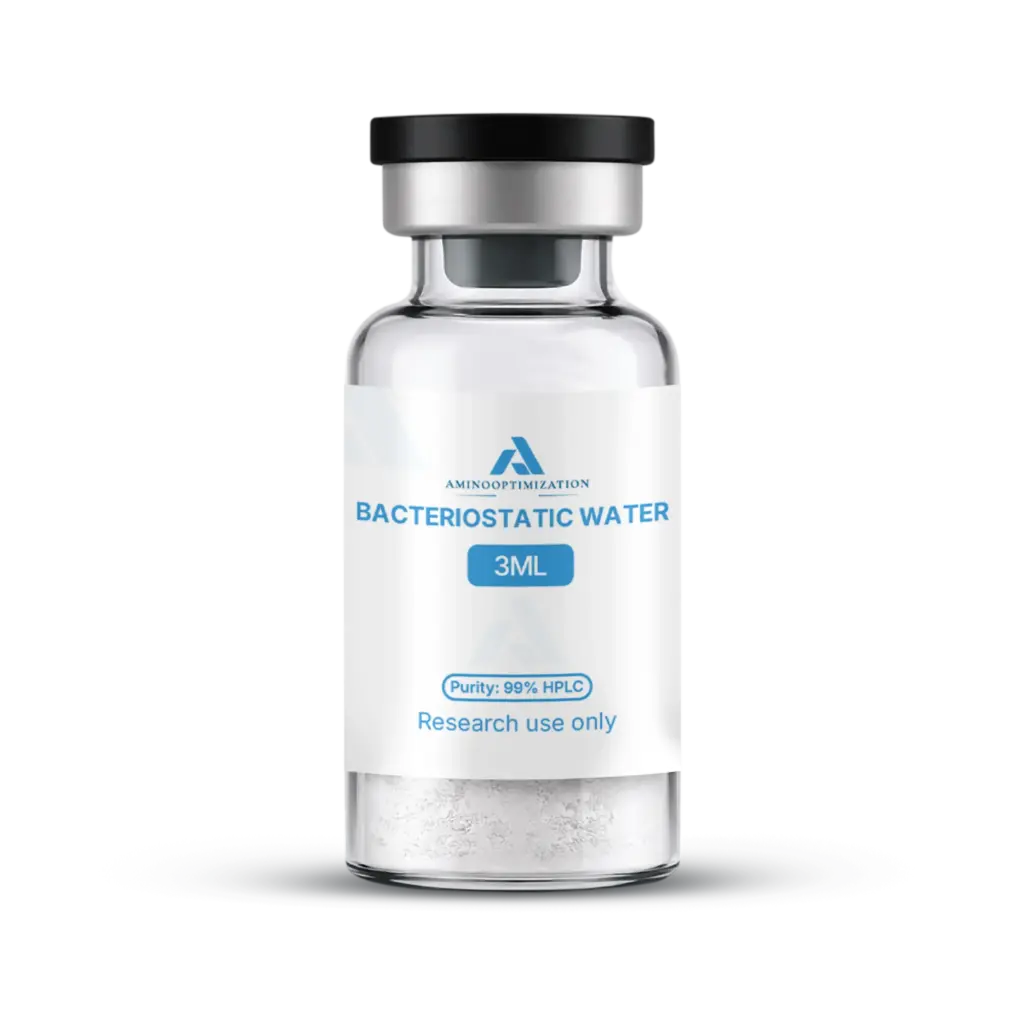
Lyophilised peptide requires reconstitution with a suitable sterile diluent before use in solution. Bacteriostatic water is the diluent most commonly specified for multi-use laboratory preparations; sterile water is typical for single-use work.
Direct the diluent stream against the inner wall of the vial rather than onto the powder itself, and allow the material to dissolve without agitation. Peptides are susceptible to shear stress — do not shake the vial. Swirl gently if needed, and expect full dissolution within a few minutes at room temperature.
Working concentration is a function of how much diluent is added to a given vial mass. Our peptide reconstitution calculator computes the resulting concentration for any combination of vial size and diluent volume.
Storage and stability
Before reconstitution: store the sealed vial in a freezer at -20 °C, protected from light. Lyophilised peptide is comparatively stable in this state. Brief excursions to ambient temperature during shipping are normal and are not expected to compromise a properly lyophilised product.
After reconstitution: refrigerate at 2–8 °C and protect from light. Reconstituted peptide in solution is materially less stable than the dry powder. Avoid repeated freeze-thaw cycles, a well-documented cause of aggregation and loss of measurable potency — aliquot instead if repeated sampling is required.
Inspect solutions before use. Cloudiness, visible particulate, or discolouration indicate the material should not be relied upon for quantitative work.
Certificate of Analysis
Every lot is tested by high-performance liquid chromatography, and the purity figure shown above refers to analytical results for the specific lot supplied — not to a generic specification. A Certificate of Analysis is available on request, and we will provide lot-specific documentation before purchase if your protocol requires it.
Purity by HPLC describes the proportion of the target peptide relative to detectable related substances. It is a statement about the material as manufactured and tested. It is expressly not a representation that the material is suitable for any use in humans or animals.
Handling and safety
Handle in accordance with good laboratory practice. Use appropriate personal protective equipment, work in a suitable containment environment, and dispose of material and consumables according to your institution’s requirements and applicable local regulation. Anyone with access to this material should understand that it is not for human or veterinary use.
Frequently asked questions
What distinguishes MOTS-C from other mitochondrial-derived peptides?
MOTS-C is encoded within the 12S ribosomal RNA gene, MT-RNR1, of the mitochondrial genome. Humanin, the other well-characterised peptide in this class, is encoded at a separate locus, the 16S ribosomal RNA gene, MT-RNR2. The two are studied through largely distinct proposed pathways.
Is MOTS-C approved in Canada?
No. This compound has not been evaluated or authorised by Health Canada, the FDA, or any comparable regulatory authority. It carries no DIN or NPN, its safety and efficacy for human use have not been assessed, and it is supplied for laboratory research only.
How much diluent should be used for reconstitution?
That depends on the working concentration your protocol requires. Use the reconstitution calculator to work out the resulting concentration for your vial size.
How stable is MOTS-C once reconstituted?
Stability in solution is shorter than in lyophilised form and depends on diluent, temperature, and handling. Refrigerate at 2–8 °C, protect from light, avoid freeze-thaw cycling, and validate stability for your own storage conditions if your work depends on it.
Do you provide a Certificate of Analysis?
Yes — lot-specific, available on request, including before purchase.
Research use only
This product is supplied solely for laboratory and scientific research. It is not a drug, food, cosmetic, or medical device, and it must not be administered to humans or animals. Nothing on this page is medical advice or a therapeutic claim. Full terms are set out in our Research Use Only Disclaimer.
Reviews
There are no reviews yet.